Best EV Charger for Renters: Practical Charging Solutions When You Can’t Install a Charger

Thinking about buying an EV but worried about where you’ll charge it? You’re not alone. For many renters, the idea of owning an electric vehicle sounds great until they realize they can’t just install a charger in the garage. Maybe your apartment doesn’t have dedicated parking. Maybe your landlord isn’t interested in electrical upgrades. Or maybe you’re tired of getting vague answers about charging options.
Here’s the good news: thousands of renters successfully own and charge EVs every day without installing a permanent home charger. With portable chargers, workplace charging, public networks, and a few smart strategies, owning an EV can be much easier than you think. Let’s look at the options that actually work in the real world.
Quick Verdict
For most renters, a dual-voltage portable EV charger is the best overall solution. It offers the flexibility to charge from a standard household outlet when that’s all you have available, while also supporting faster charging from compatible 240-volt outlets when the opportunity arises.
If you have access to workplace charging, you may not need a dedicated home charging setup at all. And if home charging isn’t possible, public charging networks can easily fill the gaps.
The best charging strategy for renters isn’t relying on a single solution, it’s combining portable charging, workplace charging, and public charging options to create a setup that fits your lifestyle.
The Biggest Charging Challenges Renters Face
Owning an EV is pretty straightforward when you own your home. You install a charger, plug in overnight, and wake up with a full battery. Renters don’t always have that luxury.
The first hurdle is often parking. Many apartment complexes have shared parking lots or street parking, which makes it difficult to access a power source consistently. Even if an outlet is nearby, it may not be designated for personal use.
Landlord restrictions create another challenge. Installing a Level 2 charger usually requires electrical work, permits, and approval from the property owner. Some landlords are happy to accommodate EV drivers. Others aren’t interested in making upgrades for a single tenant.
Older buildings can add another layer of frustration. Many weren’t designed with electric vehicle charging in mind, and the electrical system may not have enough capacity to support additional charging equipment.
Then there’s the uncertainty factor. A lot of renters assume they need a dedicated home charger to own an EV. That’s often what stops people from making the switch in the first place. The reality is that many EV owners combine multiple charging methods, such as workplace charging, public charging stations, and portable chargers, to keep their vehicles powered without relying on a permanent installation.
The key is understanding your options and choosing a charging strategy that fits your living situation, driving habits, and budget.
Portable EV Chargers: The Best Option for Most Renters
For most renters, a portable EV charger is the closest thing to a perfect charging solution.
Unlike permanently installed chargers, portable units don’t require electrical work, permits, or landlord approval. You simply plug them into a compatible outlet and start charging. When you move, the charger moves with you.
Think of a portable charger as the EV equivalent of carrying your laptop charger. You’re not tied to one location. Whether you’re charging at a rental home, an apartment, a friend’s house, or a vacation property, you have the flexibility to use available power sources when needed.
What Is a Portable EV Charger?
A portable EV charger is a compact charging unit that connects your vehicle to a power outlet. Most EVs include a basic portable charger from the factory, but many drivers upgrade to aftermarket models that offer faster charging speeds, adjustable power settings, better weather protection, and additional safety features.
Depending on the model, a portable charger may work with standard household outlets, higher-powered 240-volt outlets, or both.
Pros and Cons of Portable Chargers
The biggest advantage is flexibility. You don’t need to own property or get permission from a landlord. You can charge wherever compatible power is available.
Portable chargers also tend to cost far less than installing a dedicated charging station, making them attractive for renters who want to avoid large upfront expenses.
The downside is that charging speed depends heavily on the outlet you’re using. A standard household outlet will charge much more slowly than a dedicated 240-volt connection. You’ll also need to make sure any outlet you use is safe, properly grounded, and capable of handling the electrical load.
Features to Look For
Not all portable chargers are created equal.
Look for adjustable amperage settings, which allow you to reduce power draw when using older electrical circuits. This can help prevent tripped breakers and improve charging safety.
Weather resistance is important if you’ll be charging outdoors. Rain, dust, and heat can take a toll on charging equipment over time.
Cable length is another feature renters often overlook. A few extra feet can make the difference between reaching an outlet comfortably and being unable to charge at all.
Smart charging features can also be useful. Some chargers allow you to schedule charging sessions, track energy usage, and monitor charging status through a smartphone app.
Finally, prioritize chargers that carry recognized safety certifications. A cheaper charger may save money upfront, but reliability and safety should always come first when dealing with high-voltage equipment.
Which Portable Charger Is Best for Renters?
The best choice depends on your situation.
If you’re primarily charging from standard household outlets, a simple and reliable Level 1 portable charger may be all you need.
If you have access to a 240-volt outlet at home, work, or another regular location, a dual-voltage portable charger offers much more flexibility because it can work with both Level 1 and Level 2 charging setups.
For frequent travelers, compact chargers with interchangeable plugs and adapter support are often the most versatile option because they can adapt to different charging environments without requiring multiple charging devices.
For many renters, a quality dual-voltage portable charger strikes the best balance between convenience, flexibility, and long-term value.
Using Standard Household Outlets (Level 1 Charging)
One of the biggest surprises for new EV owners is that you can charge your vehicle using the same type of outlet that powers a lamp, television, or coffee maker.
This is known as Level 1 charging, and for many renters, it’s the simplest way to keep an EV charged without installing any additional equipment.
How Level 1 Charging Works
Level 1 charging uses a standard 120-volt household outlet. Most electric vehicles come with a portable charging cable that plugs directly into these outlets, making it the easiest charging method to get started with.
There’s no special installation required. If you have access to a dedicated outlet near your parking space and permission to use it, you can start charging almost immediately.
How Much Range Can You Add Overnight?
Level 1 charging is slow compared to Level 2 chargers, but “slow” doesn’t necessarily mean “insufficient.”
Most EVs gain roughly 3 to 5 miles of driving range per hour of charging. Over an 8- to 12-hour overnight charging session, that can translate to 25 to 60 miles of added range.
For someone with a short daily commute, that’s often enough to replace the energy used each day.
When Level 1 Charging Is Enough
Level 1 charging works best for renters who:
- Drive relatively short distances each day.
- Have consistent overnight access to an outlet.
- Can supplement charging with workplace charging or public charging stations when necessary.
- Primarily use their EV for commuting and local trips.
If your daily driving falls well below your vehicle’s total range, Level 1 charging may be all you need most of the time.
Limitations Renters Should Know About
The biggest drawback is charging speed.
If you regularly drive long distances, take frequent road trips, or have a lengthy daily commute, Level 1 charging may struggle to keep up with your energy needs.
You should also avoid using extension cords unless both your vehicle manufacturer and charger manufacturer explicitly permit it. EV charging places a continuous electrical load on the circuit for many hours, and improper cords can create safety risks.
It’s equally important to verify that the outlet is in good condition. Loose, damaged, or outdated outlets can overheat during prolonged charging sessions.
For many renters, though, Level 1 charging serves as a dependable foundation. Combined with workplace charging or occasional visits to public charging stations, it can support EV ownership more effectively than most people expect.
Landlord-Friendly EV Charging Options
Just because you rent doesn’t mean EV charging is off the table. In many cases, the challenge isn’t finding a charging solution, it’s finding one that works for both you and your landlord.
The good news is that there are several options that can make charging easier without requiring major property modifications.
Asking Permission for Charger Installation
Some renters assume their landlord will automatically reject any request related to EV charging. That’s not always the case.
As electric vehicles become more common, many property owners recognize that EV charging can make their properties more attractive to current and future tenants. A dedicated charging option may even increase the property’s long-term appeal.
If you have assigned parking and access to nearby electrical infrastructure, it’s worth starting a conversation before assuming the answer is no.
Portable Chargers That Require No Permanent Modifications
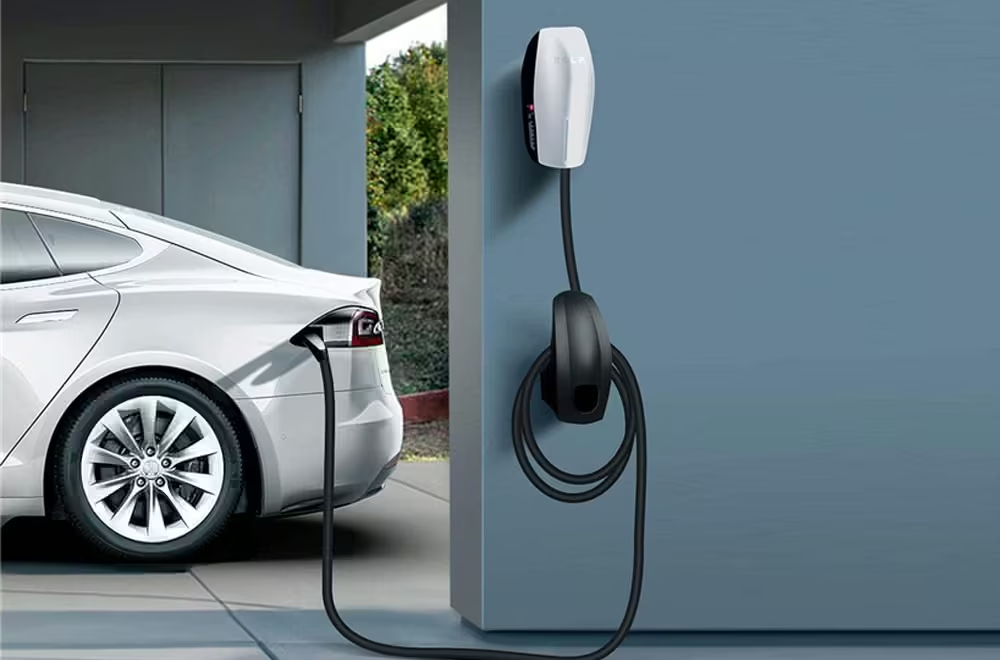
Portable EV chargers are often the easiest solution because they don’t require drilling, mounting equipment, or altering the property’s electrical system.
If there’s already a suitable outlet near your parking area, a portable charger may allow you to charge your vehicle while avoiding installation costs and landlord concerns altogether.
This approach is especially appealing for renters who expect to move within the next few years.
Temporary Outlet Upgrades
In some situations, a landlord may be open to upgrading an existing outlet rather than installing a dedicated charging station.
For example, upgrading a standard outlet to support higher-capacity charging can be less expensive and less disruptive than a full EV charger installation.
The feasibility depends on the building’s electrical system, local regulations, and available capacity, but it’s often worth discussing.
Cost-Sharing Arrangements
One reason landlords hesitate is cost.
Offering to cover part or all of the installation expense can make approval more likely. Some tenants even propose arrangements where the charging equipment remains with the property after they move out, creating a long-term benefit for the owner.
Every property is different, but approaching the discussion as a mutually beneficial improvement can lead to better results.
How to Approach Your Landlord
When discussing EV charging, focus on solutions rather than demands.
Explain how the charging setup will work, emphasize safety, and be prepared to answer questions about installation requirements and electricity usage.
It can also help to highlight the growing demand for EV-friendly housing. More renters are shopping for properties that support electric vehicles, and landlords who adapt may gain a competitive advantage in the future.
Most importantly, be flexible. If a dedicated charger isn’t possible, alternatives such as portable charging, outlet access, or shared charging arrangements may still provide a workable solution.
A productive conversation often opens more doors than renters expect. Even if a landlord declines one option, they may be willing to consider another that accomplishes the same goal with fewer costs or complications.
Workplace Charging: The Hidden Advantage Many Renters Overlook
When renters think about EV charging, they usually focus on charging at home. But for many drivers, the easiest place to charge isn’t where they live, it’s where they work.
If your employer offers EV charging stations, you may be able to cover most or even all of your weekly charging needs while you’re on the clock.
Why Workplace Charging Can Replace Home Charging
Think about how long your car sits parked during a typical workday.
If you’re at the office for eight hours, that’s plenty of time to add a meaningful amount of range, especially when using a Level 2 charger. Even charging a few days per week may be enough to keep your battery topped up for regular commuting.
For renters who lack dedicated parking or access to an outlet at home, workplace charging can eliminate much of the stress associated with EV ownership.
How Much Charging Do Most Commuters Need?
The average commuter doesn’t drive hundreds of miles every day.
Many EV owners use only a small portion of their battery capacity during a typical workweek. As a result, a few charging sessions at work can often replace the need for nightly home charging.
This is especially true for drivers with moderate commutes and access to reliable workplace charging infrastructure.
Questions to Ask Your Employer
If your workplace already offers charging stations, find out:
- Whether charging is free or paid.
- How many charging stations are available.
- Whether employees need to reserve charging spots.
- If charging is available to all employees or limited to certain areas.
- Whether there are plans to expand charging access.
If charging isn’t available yet, it may still be worth asking. Many employers are exploring workplace charging programs as employee demand grows.
Pros and Cons of Depending on Workplace Charging
The biggest advantage is convenience. Your vehicle charges while you’re already parked, which means no extra stops during your day.
Workplace charging can also reduce your reliance on public fast chargers, helping lower charging costs and minimizing battery wear over time.
The downside is that you’re dependent on your employer’s facilities. If you change jobs, work remotely, travel frequently, or lose access to workplace charging, you’ll need a backup plan.
That’s why many renters combine workplace charging with a portable EV charger and occasional use of public charging stations.
For renters looking for a practical, low-cost charging strategy, workplace charging is often one of the most effective solutions available. In some cases, it can make owning an EV just as convenient as it is for homeowners with dedicated chargers.
Public Charging Networks for Renters
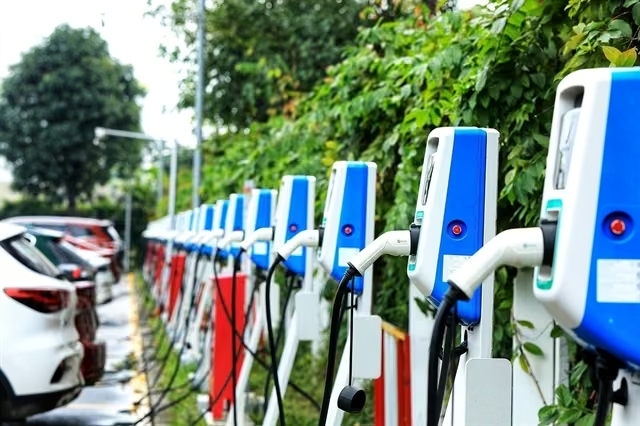
For renters without reliable home charging, public charging networks can fill the gap.
The key is not treating public charging as an emergency option. Instead, think of it as part of a flexible charging plan that works alongside portable chargers, workplace charging, and occasional home charging opportunities.
When Public Charging Makes Sense
Public charging is especially useful when:
- You don’t have access to a dedicated outlet at home.
- You need extra range before a road trip.
- Your workplace doesn’t offer charging.
- Your weekly driving exceeds what Level 1 charging can replace.
- You need a quick battery top-up while running errands.
Many EV owners build charging into activities they’re already doing, such as grocery shopping, dining out, or visiting a shopping center.
Level 2 vs. DC Fast Charging
Not all public charging stations are the same.
Level 2 chargers are the most common option. They’re ideal when your vehicle will remain parked for several hours, such as at work, shopping centers, apartment complexes, hotels, or public parking garages.
DC Fast Chargers deliver significantly more power and can add substantial range in a short period of time. They’re often the best choice for road trips, long-distance travel, or situations where you need to get back on the road quickly.
While fast charging is incredibly convenient, it generally costs more than Level 2 charging and shouldn’t necessarily be your only charging method.
How Public Charging Costs Compare
Public charging prices vary by location, provider, and charging speed.
Level 2 charging is often the more affordable option, while DC fast charging typically commands a premium because of the convenience and higher power delivery.
For renters, the goal isn’t always finding the cheapest charging method. It’s finding the right balance between convenience, cost, and availability.
Major Public Charging Networks
Several charging networks make EV ownership much easier for renters.
The most widely recognized option is the Tesla Supercharger network, known for its extensive fast-charging coverage and growing compatibility with non-Tesla vehicles in many regions.
Other major networks include ChargePoint, EVgo, and Electrify America. Together, these providers operate thousands of charging stations across cities, suburbs, highways, workplaces, retail centers, and public parking facilities.
Many drivers use multiple networks rather than relying on a single provider. This gives them more flexibility when traveling or charging near home.
Apps That Make Charging Easier
One of the smartest things a renter can do is download charging apps before they actually need them.
These apps can help you:
- Locate nearby charging stations.
- Check real-time charger availability.
- Compare charging speeds.
- View pricing information.
- Start and monitor charging sessions.
- Plan longer road trips.
A little planning goes a long way. Knowing where reliable charging stations are located near your home, workplace, and frequently visited destinations can remove much of the uncertainty that new EV owners worry about.
For many renters, public charging networks serve as a dependable safety net. Even if you primarily charge at home or work, having access to a strong public charging network makes EV ownership far more convenient and flexible.
EV Charging Adapters Every Renter Should Consider
If flexibility is the biggest advantage renters have, adapters are what make that flexibility possible.
A good adapter can turn an outlet that would otherwise be unusable into a valuable charging opportunity. While homeowners typically charge in one location, renters often encounter different electrical setups depending on where they live, work, travel, or visit family and friends.
That’s why adapters are often more useful for renters than almost any other group of EV owners.
Why Adapters Matter More for Renters
Imagine finding a convenient outlet near your parking space only to discover your charger doesn’t fit it.
That’s a frustrating problem, but it’s also a common one.
Different buildings use different outlet configurations. Some may have standard household outlets, while others offer higher-capacity outlets commonly used for dryers, RVs, or workshop equipment.
The right adapter can help you take advantage of charging opportunities that would otherwise be unavailable.
Common Outlet Types You May Encounter
The exact outlet types vary by region, but renters frequently come across:
- Standard household outlets for Level 1 charging.
- Dryer-style outlets that can support faster charging.
- RV park outlets that provide higher-capacity power.
- Garage and workshop outlets in rental homes.
- Shared parking facilities with dedicated electrical access.
A dual-voltage portable charger combined with compatible adapters can often handle several of these situations without requiring multiple charging devices.
Adapter Safety Tips
Adapters can be incredibly useful, but safety should always come first.
Only use adapters recommended by your charger manufacturer or from reputable suppliers that meet recognized safety standards.
Avoid stacking multiple adapters together or using makeshift solutions to force incompatible connections. If an outlet, adapter, or charging cable becomes unusually hot during charging, stop using it and investigate the issue.
It’s also important to confirm that the outlet and electrical circuit can safely support the charging load. Just because a plug fits doesn’t mean the electrical system is suitable for continuous EV charging.
Must-Have Adapter Scenarios
You don’t need to carry a suitcase full of adapters.
Most renters benefit from keeping a small selection that covers their most likely charging situations. For example:
- A household outlet adapter for everyday charging.
- An adapter for common 240-volt outlets.
- An RV-compatible adapter for travel and campground charging.
- Any manufacturer-approved adapters required for your specific charger.
The goal isn’t to prepare for every possible situation. It’s to create enough flexibility that you rarely find yourself unable to charge when an opportunity presents itself.
For renters, adapters are less about convenience and more about access. They expand your charging options, reduce dependence on a single location, and make it easier to adapt as your living situation changes over time.
Combining Multiple Charging Methods for Maximum Flexibility
One mistake many first-time EV buyers make is searching for a single perfect charging solution.
Most renters don’t need one.
The most successful EV owners usually combine several charging methods depending on their schedule, driving habits, and available resources. Instead of relying entirely on home charging, they build a flexible system that ensures they’re rarely caught with a low battery and no way to recharge.
Think of it like having multiple ways to access the internet. You might use your home Wi-Fi most of the time, switch to mobile data when you’re out, and connect to public Wi-Fi when traveling. EV charging works much the same way.
The Apartment Dweller Strategy
If you live in an apartment with access to a nearby outlet, Level 1 charging can serve as your primary charging method.
You may not add a huge amount of range overnight, but steady charging throughout the week can cover a surprising amount of daily driving. When you need additional range, public charging stations can fill the gap.
This approach works particularly well for drivers with short commutes and predictable routines.
The Workplace Charging Strategy
For renters with access to workplace charging, the office can become the primary charging location.
Charging a few times each week during work hours may provide enough energy for daily commuting without needing a dedicated charger at home. In this setup, a portable charger serves as a backup rather than your main charging source.
Many renters find this arrangement to be one of the most convenient and cost-effective solutions available.
The Public Charging Strategy
Some renters rely heavily on public charging networks because they lack access to both home and workplace charging.
While this requires a little more planning, it’s entirely manageable.
The key is integrating charging into activities you’re already doing. Charging while shopping, exercising, eating dinner, or running errands can reduce the feeling that charging is taking extra time out of your day.
The Frequent Traveler Strategy
Drivers who travel often benefit from a combination of portable charging equipment, adapters, and public charging networks.
A portable charger gives you access to available outlets when staying with friends, visiting family, or renting vacation properties. Public fast chargers provide quick top-ups during longer trips.
This layered approach creates flexibility no matter where you are.
Why Flexibility Beats Perfection
The best charging strategy for renters is rarely the most complicated.
It’s the one that adapts to your lifestyle.
Some weeks you may charge primarily at work. Other weeks you may rely more on public charging stations. If you move to a new apartment, your setup may change again.
That’s completely normal.
By combining portable chargers, workplace charging, public networks, and adapters, renters can create a charging system that’s reliable, affordable, and far more convenient than many people expect before buying an EV.
Common Mistakes Renters Make When Charging an EV
Owning an EV as a renter is entirely possible, but a few common mistakes can create unnecessary headaches. The good news is that most of them are easy to avoid once you know what to look for.
Relying Only on Fast Charging
DC fast chargers are incredibly convenient, especially when you’re in a hurry. The problem is that some renters assume fast charging will be their only charging solution.
That approach can quickly become expensive and inconvenient.
Fast charging works best as a supplement to your overall charging strategy, not as the foundation of it. Whenever possible, combine it with workplace charging, Level 1 charging, or Level 2 charging to reduce costs and avoid unnecessary trips to charging stations.
Buying More Charger Than You Need
It’s easy to get caught up in charging speeds, advanced features, and high-powered equipment.
But many renters end up purchasing chargers that far exceed their actual needs.
If you drive a modest number of miles each day, a simple portable charger may perform just as well as a more expensive setup. Before spending money, calculate your average weekly driving distance and choose a solution that matches your real-world usage.
Ignoring Electrical Safety
Not every outlet is suitable for EV charging.
Older outlets, damaged wiring, overloaded circuits, and poorly maintained electrical systems can create problems during long charging sessions. Because EV charging draws power continuously for hours at a time, electrical issues that might go unnoticed with other appliances can become more serious.
If you’re unsure about an outlet’s condition, have it inspected before relying on it for regular charging.
Using Improper Extension Cords or Adapters
Many new EV owners assume any extension cord or adapter will work.
That’s a risky assumption.
Using products that aren’t designed for EV charging can lead to overheating, reduced charging performance, or safety hazards. Stick to manufacturer-approved equipment and follow the charger’s instructions carefully.
A quality adapter may cost more upfront, but it’s a lot cheaper than dealing with damaged equipment or electrical repairs.
Failing to Have a Backup Plan
Even the best charging arrangement can occasionally fall through.
A workplace charger may be occupied. A public charging station may be out of service. You might move to a new apartment with different parking conditions.
That’s why flexibility matters.
The most successful renters usually have at least two or three charging options available. Having a backup plan reduces stress and ensures you’re never dependent on a single charging source.
Assuming EV Ownership Isn’t Possible as a Renter
This may be the biggest mistake of all.
Many people rule out electric vehicles before they even explore their options. In reality, thousands of renters successfully own EVs without installing a dedicated home charger.
The key isn’t finding a perfect setup. It’s finding a practical combination of charging solutions that fits your lifestyle.
Once renters understand the available options, EV ownership often becomes much more achievable than they initially imagined.
Frequently Asked Questions
Can I own an EV if my apartment has no charger?
Yes. Many renters own EVs without access to a dedicated charger at home. Depending on your situation, you can rely on workplace charging, public charging stations, portable chargers, or a combination of all three. The key is having a charging plan that matches your driving habits.
Can I run an extension cord to charge my EV?
In general, it’s best to avoid extension cords unless both your vehicle manufacturer and charger manufacturer specifically approve their use. EV charging places a continuous load on electrical circuits for long periods, and the wrong extension cord can create safety risks.
Will landlords usually allow EV charging?
It depends on the property and the landlord. Some property owners are actively adding EV charging options to attract tenants, while others may be hesitant because of costs or electrical limitations. If you have assigned parking, it’s worth asking. You may be surprised by how open some landlords are to renter-friendly charging solutions.
Is Level 1 charging enough for daily driving?
For many drivers, yes. If you have a relatively short commute and can charge overnight, Level 1 charging may provide enough range to cover your daily needs. Drivers with longer commutes may need to supplement with workplace charging or public charging stations.
What’s the cheapest way for renters to charge an EV?
If you have access to a standard household outlet, Level 1 charging is often the most affordable option. Workplace charging can also be highly cost-effective, especially if your employer offers it as a free or low-cost benefit. Public charging networks provide flexibility but are typically more expensive than charging from a home outlet.
Should renters buy a portable EV charger?
In most cases, yes. A portable EV charger gives renters flexibility that a permanently installed charger cannot. It can be used at different properties, taken on trips, and paired with various outlet types through compatible adapters. For renters, portability is often one of the most valuable features a charger can offer.
What’s the best EV charger for renters?
For most renters, a dual-voltage portable EV charger is the best overall choice. It offers the flexibility to charge from both standard household outlets and higher-capacity outlets when available. Combined with workplace charging and access to public charging networks, it provides a practical solution that can adapt to changing living situations.
Conclusion
Owning an EV as a renter may seem complicated at first, but it doesn’t have to be.
While homeowners often have the advantage of installing dedicated charging equipment, renters have more options than ever before. Portable EV chargers, workplace charging programs, public charging networks, and charging adapters can work together to create a reliable and convenient charging routine.
For most renters, the smartest approach is to focus on flexibility rather than permanence. A quality portable charger paired with access to workplace or public charging can cover the vast majority of charging needs without requiring expensive installations or major changes to your rental property.
The best EV charger for renters isn’t necessarily the fastest or most advanced model. It’s the one that fits your lifestyle, works with your living situation, and gives you the freedom to charge wherever opportunities are available.
If you’ve been putting off buying an electric vehicle because you’re worried about charging, don’t assume renting is a deal-breaker. With the right strategy, EV ownership can be just as practical for renters as it is for homeowners.