Ever wondered whether a luxury EV like Mercedes is really worth the extra money compared with a fast-rising brand like BYD?
I asked myself that same question recently while shopping for an electric car. I ended up comparing a Mercedes EQE with a BYD Seal side by side, and the difference surprised me.
Electric cars are exploding worldwide, EVs already make up a big and growing share of new car sales. But here’s the tricky part: premium brands promise luxury and prestige, while newcomers promise shocking value. So which one actually makes more sense for real drivers?
Mercedes EV vs BYD EV: The Quick Verdict
If you want the short answer, here it is.
Mercedes electric cars win on luxury, brand prestige, and cabin experience. Sit inside a Mercedes EQE or EQS and you immediately feel where the money goes. The materials feel rich. The ride is quiet and smooth. Everything is designed to feel like a high-end machine.
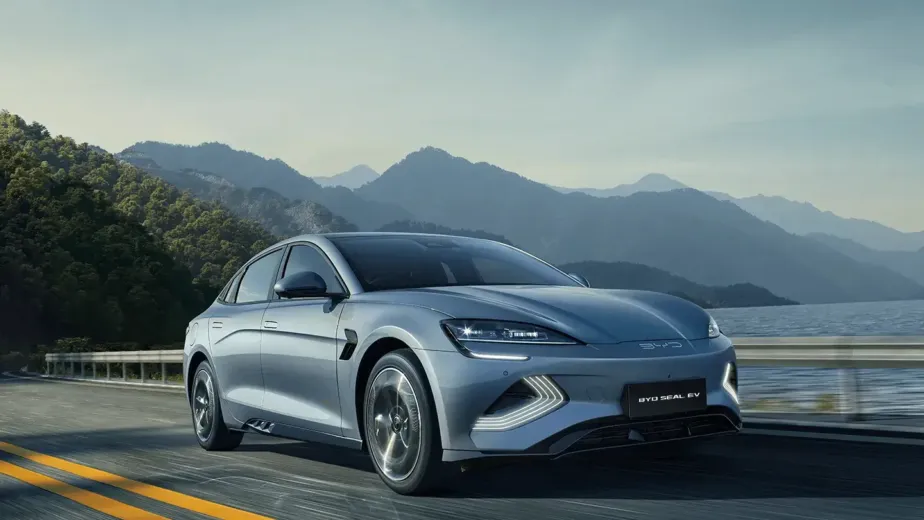
BYD, on the other hand, wins on value and battery technology. Cars like the BYD Seal, Dolphin, and Atto 3 deliver impressive range, strong performance, and modern tech at a much lower price. In many markets, a BYD can cost tens of thousands less than a comparable Mercedes EV.
Here’s the simple way to think about it:
- Choose Mercedes EVs if you want luxury, status, and the most refined driving experience.
- Choose BYD EVs if you want strong performance, solid range, and the best value for your money.
Now the real question is why the difference is so big. To understand that, we need to look at the brands themselves.
Meet the Brands: Mercedes-Benz vs BYD
To really understand the difference between Mercedes EVs and BYD EVs, you have to look at where these companies come from. Their history explains almost everything about how their electric cars are designed.
Mercedes-Benz: A Century of Luxury Engineering
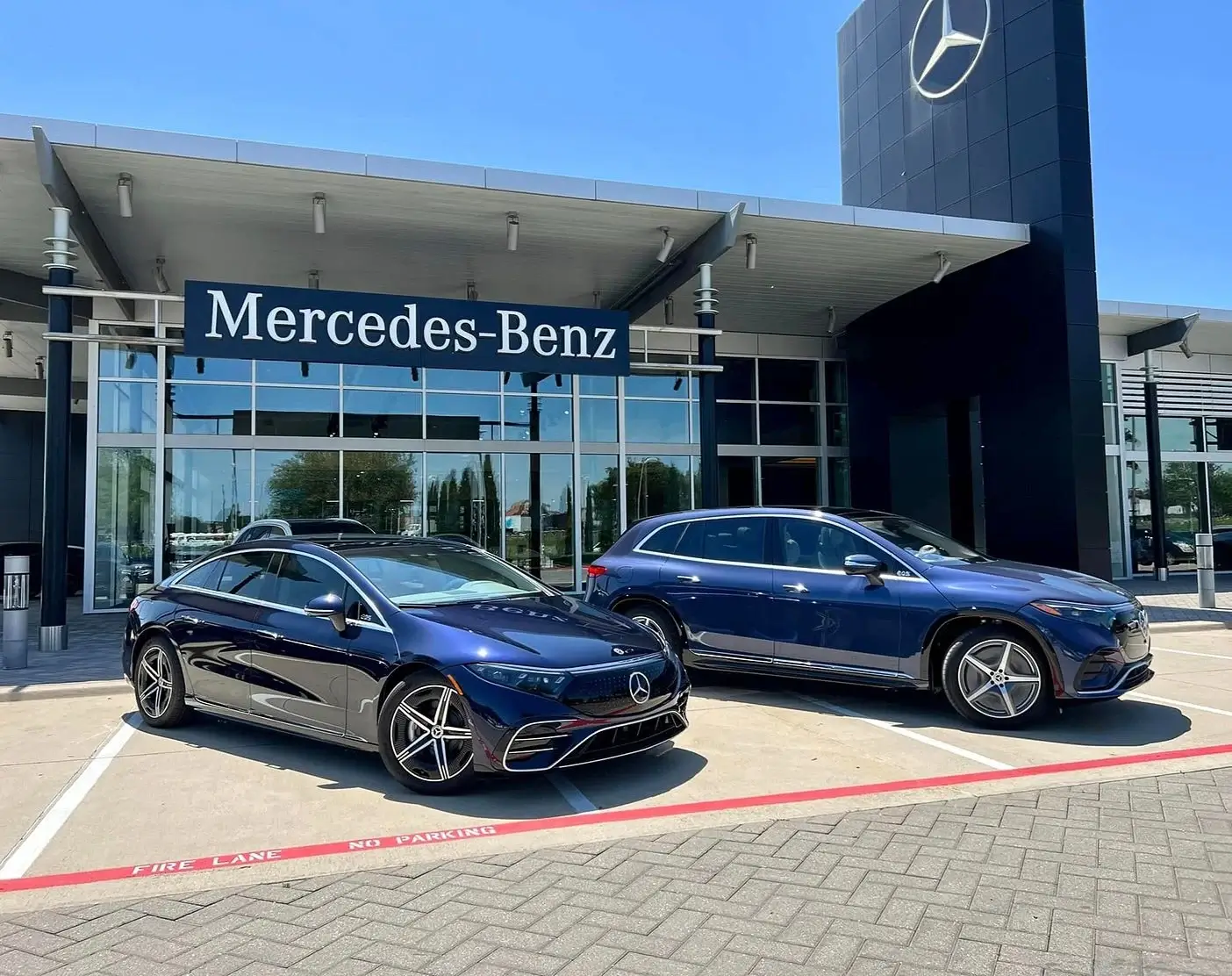
Mercedes-Benz has been building cars for well over a century. The brand is famous for luxury, comfort, and engineering precision. When the company moved into electric vehicles, it carried that same philosophy into its EV lineup.
The electric range is known as the EQ series, which includes models like the EQS, EQE, EQA, and EQB.
Mercedes EVs are designed with a clear goal: make electric cars feel ultra-premium. That means whisper-quiet cabins, soft ride quality, and interiors that feel closer to a luxury lounge than a typical car.
For example, the EQS introduced the massive Hyperscreen dashboard, which stretches across the entire front of the cabin. It’s one of the most futuristic interiors on the market.
But this luxury approach comes with a trade-off. Mercedes EVs usually sit in the higher price bracket, which puts them out of reach for many buyers.
BYD: The EV Disruptor
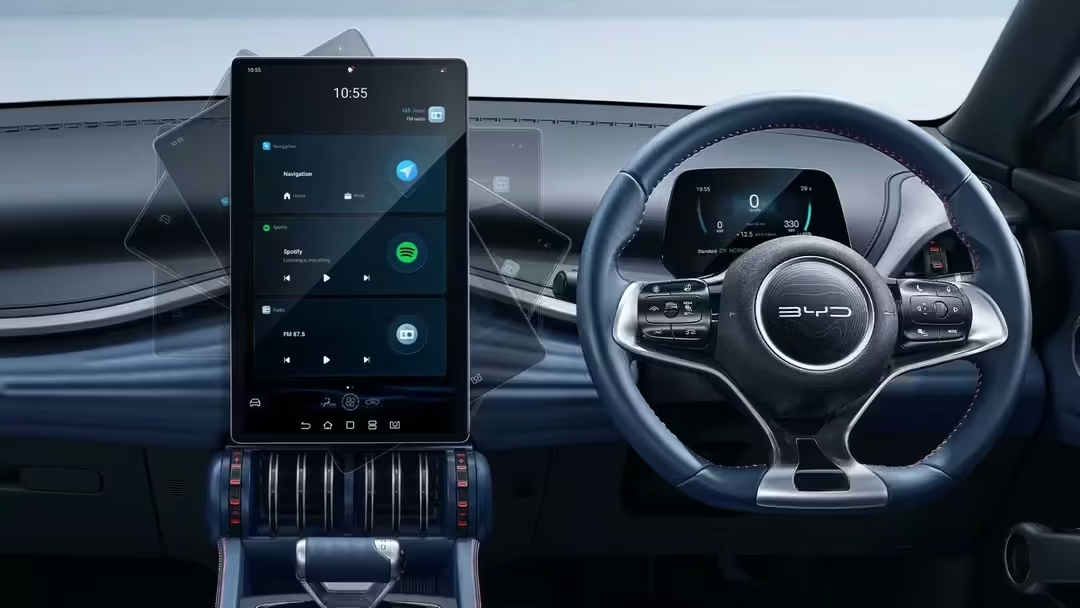
BYD is a very different story.
The company started as a battery manufacturer in the 1990s and later expanded into electric vehicles. Today, it’s one of the largest EV producers in the world and a major competitor to companies like Tesla.
What makes BYD unique is that it builds almost everything in-house, including its batteries. Its famous Blade Battery is known for safety, durability, and efficiency.
Instead of focusing on luxury, BYD focuses on technology and affordability. Cars like the BYD Seal, Dolphin, and Atto 3 offer strong performance and long driving range while staying far cheaper than most premium EV brands.
That strategy has worked incredibly well. In many global markets, BYD is quickly becoming one of the best-selling EV brands.
So while Mercedes focuses on luxury electric vehicles, BYD focuses on high-tech EVs that more people can afford.
And that difference becomes even clearer when you compare their actual models.
EV Lineup Comparison: Mercedes Models vs BYD Model
Mercedes focuses on premium electric vehicles, and its lineup reflects that. Most of its EVs are positioned in the luxury sedan and luxury SUV categories.
Some of the most well-known Mercedes electric models include:
Mercedes EQS
This is the flagship electric sedan. It’s designed to compete with the most luxurious EVs on the market. Expect an ultra-quiet cabin, extremely smooth ride quality, and advanced technology.
Mercedes EQE
Think of this as the smaller sibling of the EQS. It still offers a high-end interior and impressive electric range but at a slightly lower price point.
Mercedes EQA
This is one of Mercedes’ more accessible EVs. It’s a compact electric SUV aimed at drivers who want the Mercedes brand in a smaller package.
Mercedes EQB
The EQB is a practical electric SUV that can even offer seven seats, which is rare in the EV market.
Overall, Mercedes keeps its EV lineup focused on luxury buyers who prioritize comfort, brand prestige, and refinement.
BYD EV Models
BYD takes a completely different approach. Instead of focusing only on premium cars, it builds EVs across multiple price segments, from affordable city cars to high-performance sedans.
Some of the most popular BYD electric models include:
BYD Seal
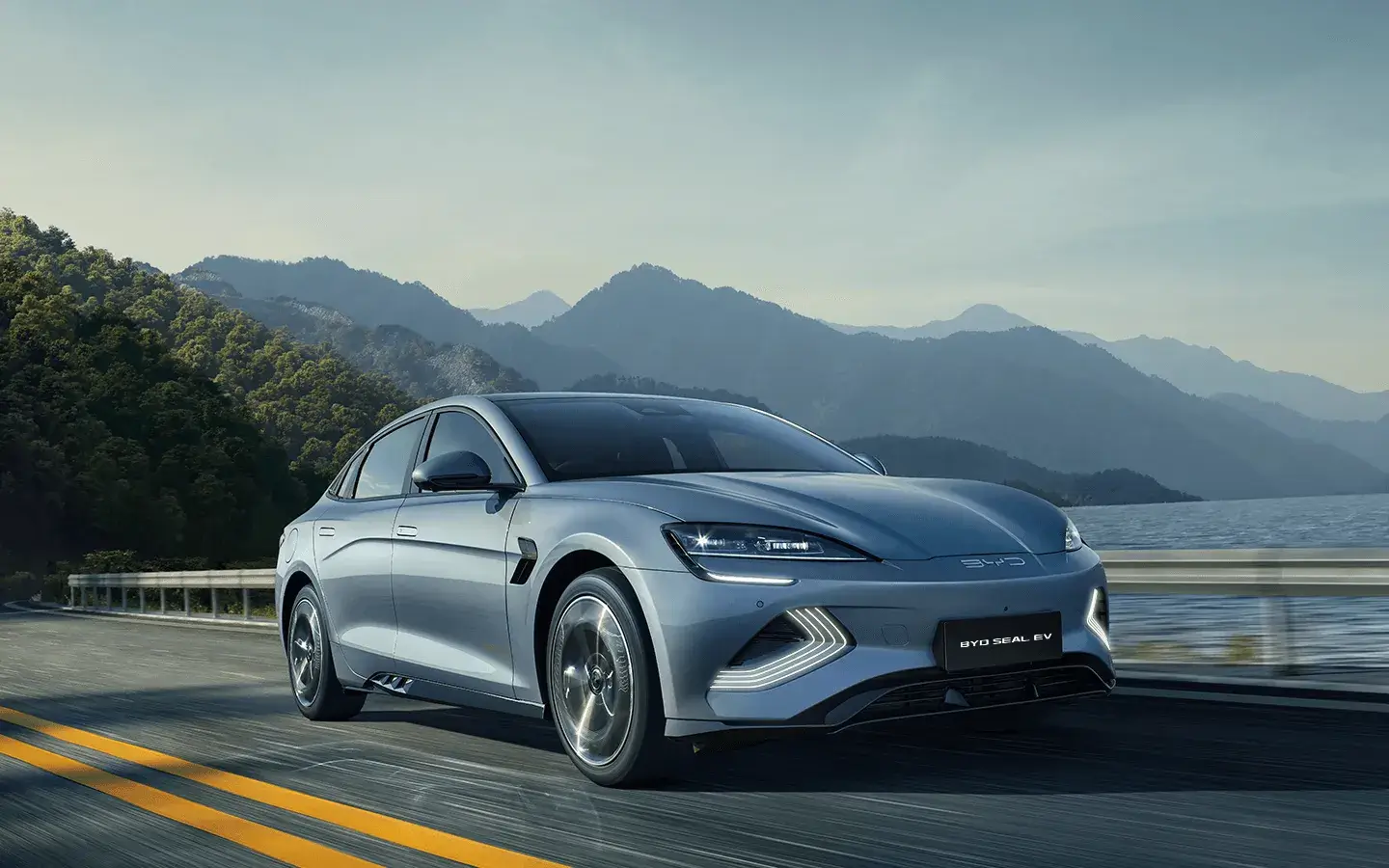
This sporty electric sedan competes with cars like the Tesla Model 3. It offers strong acceleration, long driving range, and advanced battery technology.
BYD Atto 3
One of BYD’s most popular global models. It’s a compact electric SUV with practical space, modern technology, and competitive pricing.
BYD Dolphin
This small electric hatchback is designed to be affordable and efficient. It’s a great entry point for drivers switching to EVs.
BYD Han
The Han sits at the top of BYD’s lineup. It’s a large electric sedan that offers strong performance and premium features at a lower price than most luxury EVs.
The Key Difference in Strategy
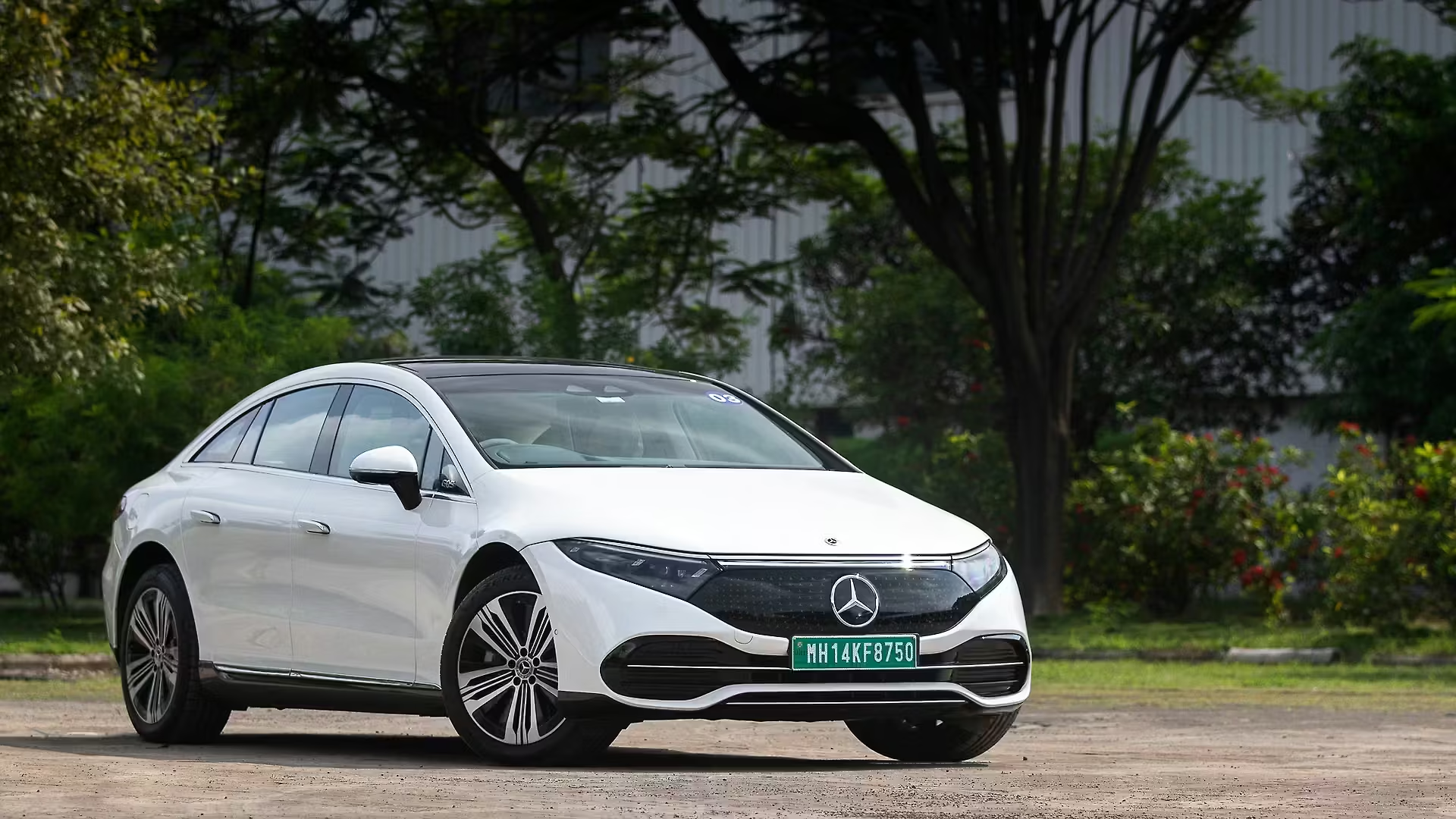
Mercedes keeps its EV lineup small and luxury-focused, while BYD spreads across many price points and vehicle types.
That means:
- Mercedes competes mainly in the premium EV market
- BYD competes in both affordable and mid-range EV segments
And that difference becomes very obvious when you compare the prices of these electric cars.
Mercedes EV vs BYD EV Price Comparison
| Segment | Mercedes Model | Approx Price (Global Range) | BYD Model | Approx Price (Global Range) |
| Compact SUV | Mercedes EQA | $55,000 – $65,000 | BYD Atto 3 | $38,000 – $45,000 |
| Mid-Size Sedan | Mercedes EQE | $75,000 – $90,000 | BYD Seal | $45,000 – $55,000 |
| Flagship Sedan | Mercedes EQS | $105,000 – $125,000 | BYD Han | $60,000 – $75,000 |
| Small Hatchback | – | – | BYD Dolphin | $25,000 – $35,000 |
What This Means for Buyers
The numbers show a clear pattern: BYD consistently undercuts Mercedes on price, sometimes by a huge margin.
For example, a buyer could purchase a BYD Seal and a BYD Dolphin for roughly the price of a single Mercedes EQS in some markets.
But price alone doesn’t tell the full story.
Mercedes buyers are paying for things like luxury craftsmanship, brand prestige, and an ultra-refined driving experience. BYD buyers are often prioritizing technology, battery innovation, and value for money.
Performance and Driving Experience
Price matters, but the real test of any car happens on the road. When you drive a Mercedes EV and a BYD EV back-to-back, the difference in philosophy becomes clear very quickly.
Mercedes EV Driving Experience
Mercedes electric vehicles are built to feel effortless and refined.
The first thing most drivers notice is the silence. Cars like the EQE and EQS are incredibly quiet inside, even at highway speeds. Mercedes spends a lot of time engineering sound insulation and suspension tuning so the car feels smooth and calm.
Acceleration is still strong, electric motors make sure of that, but Mercedes focuses more on controlled power rather than aggressive performance.
The overall feeling is relaxed and luxurious. The car glides over bumps, the steering feels stable, and long drives are extremely comfortable.
That’s exactly what Mercedes buyers expect.
BYD Driving Experience
BYD takes a slightly different approach. Many of its models feel more sporty and energetic.
Take the BYD Seal as an example. It offers quick acceleration, responsive steering, and a driving style that feels more dynamic than many luxury EVs.
Instead of prioritizing maximum comfort, BYD often aims for a balance between performance and efficiency. The result is a driving experience that feels fun while still being practical for daily use.
Even more affordable models like the Atto 3 deliver surprisingly strong performance for their price category.
Acceleration and Performance Numbers
Electric cars are naturally quick, and both brands deliver strong numbers.
Many Mercedes EVs can go from 0–100 km/h in around 4 to 6 seconds, depending on the model.
Performance versions can be even faster.
BYD also competes well here. The BYD Seal Performance variant can accelerate from 0–100 km/h in about 3.8 seconds, which puts it firmly in sports-sedan territory.
For many buyers, the takeaway is simple:
- Mercedes focuses on comfort and refinement
- BYD focuses on performance and value
Both approaches work well. It just depends on what kind of driving experience you prefer.
But performance isn’t the only thing EV buyers care about. One of the biggest concerns is still battery technology and driving range.
Battery Technology and Driving Range
For many people considering an electric car, the biggest question is simple: How far can it go on a single charge?
This is where the technology inside the battery becomes extremely important. Both Mercedes and BYD invest heavily in battery development, but they approach it in very different ways.
BYD’s Blade Battery Technology
One of BYD’s biggest advantages is that it manufactures its own batteries.
Its famous Blade Battery has gained a lot of attention in the EV industry because of its design and safety. Instead of using traditional battery module structures, BYD arranges long, thin cells directly into the battery pack. This improves space efficiency and structural strength.
The Blade Battery is also known for its high safety standards. In testing, it can survive extreme conditions such as nail penetration tests without catching fire—something that has made it popular among safety-focused buyers.
Another benefit is durability. BYD claims the battery can handle many charging cycles while maintaining strong long-term performance.
Because BYD controls battery production, it can also lower the cost of its vehicles, which is a major reason its EVs are often cheaper.
Mercedes Battery Technology
Mercedes takes a different approach. Instead of focusing on mass battery production, the company focuses on high efficiency and long-range capability.
The battery systems used in vehicles like the EQE and EQS are designed for maximum driving distance and smooth energy delivery.
For example, the Mercedes EQS is known for having one of the longest driving ranges among luxury EVs, reaching up to around 770 km (WLTP) depending on the variant.
Mercedes also puts heavy emphasis on thermal management systems, which help keep the battery at an optimal temperature. This improves efficiency and protects battery health over time.
Real-World Range Comparison
In everyday driving, both brands offer competitive range numbers.
Many BYD models deliver 400–600 km of range, depending on the battery size and driving conditions.
Mercedes models, particularly the EQE and EQS, can reach 600–770 km of range, making them strong choices for long-distance drivers.
Charging Speed
Fast charging is another important factor.
Most modern Mercedes EVs support high-speed DC charging, allowing the battery to charge from roughly 10% to 80% in about 30 minutes under ideal conditions.
BYD vehicles also support fast charging, though charging speeds vary slightly depending on the model and battery configuration.
In practice, both brands allow drivers to add hundreds of kilometers of range in a relatively short stop.
Which EV Brand Is Better for Different Buyers?
At this point, the differences between Mercedes EVs and BYD EVs are pretty clear. But the real question most buyers ask is simple: Which one is right for me?
The answer depends on what you value most in a car.
Best for Luxury Buyers
If you want the feeling of stepping into a premium vehicle every time you drive, Mercedes EVs are hard to beat.
Cars like the EQE and EQS deliver an experience focused on comfort, quietness, and craftsmanship. The ride quality is smooth, the materials feel upscale, and the technology is designed to make long drives relaxing.
For drivers who care about brand prestige and luxury refinement, Mercedes remains one of the strongest choices in the EV market.
Best for Budget-Conscious Buyers
If value matters most, BYD is usually the better choice.
Models like the Atto 3, Seal, and Dolphin offer impressive performance, good driving range, and modern technology at significantly lower prices than most luxury EVs.
For many drivers, BYD delivers most of the EV experience for far less money.
Best for Performance
BYD surprises many buyers in this category.
Performance versions of cars like the BYD Seal deliver very quick acceleration, sometimes even faster than comparable luxury EVs. That means drivers who want strong performance without paying luxury prices often lean toward BYD.
Mercedes also offers performance variants, but its main focus is still refined power rather than aggressive speed.
Best for Long-Term Value
For long-term ownership costs, BYD often has an advantage.
Lower purchase prices, strong battery technology, and generally lower maintenance costs can make BYD vehicles more affordable to own over time.
Mercedes EVs, however, may hold appeal for buyers who prioritize premium brand value and high-end comfort, even if ownership costs are higher.
The Simple Way to Decide

Think of the comparison like this:
- Choose Mercedes EVs if you want luxury, prestige, and an ultra-refined driving experience.
- Choose BYD EVs if you want strong performance, modern technology, and excellent value for money.
Both brands are strong in the EV market, they just serve different types of drivers.
Pros and Cons of Mercedes EVs
Mercedes electric vehicles are designed for drivers who want a premium EV experience. They deliver impressive comfort, advanced technology, and the prestige that comes with the Mercedes badge.
But like any vehicle, they come with both strengths and trade-offs.
Pros
Exceptional luxury and comfort
Mercedes EVs are among the most refined electric cars on the market. The cabins are quiet, the materials are high-end, and the ride quality is extremely smooth.
Advanced technology
Features like the massive Hyperscreen display, intelligent driver assistance systems, and sophisticated infotainment make Mercedes EVs feel very futuristic.
Long driving range
Flagship models like the EQS offer some of the longest ranges in the luxury EV category, making them great for long-distance travel.
Strong brand prestige
For many buyers, the Mercedes brand still represents status, craftsmanship, and engineering excellence.
Cons
High purchase price
Mercedes EVs sit firmly in the luxury category, which means they cost significantly more than many competitors.
Higher maintenance and service costs
Luxury vehicles often come with higher repair and service costs once the warranty period ends.
Performance not always the main focus
While Mercedes EVs are fast, their main priority is comfort and refinement rather than aggressive performance.
Pros and Cons of BYD EVs
BYD has quickly become one of the most important players in the global EV market. Its vehicles focus on technology, battery innovation, and affordability.
Pros
Excellent value for money
BYD EVs typically cost much less than luxury competitors while still offering strong performance and modern technology.
Innovative battery technology
The Blade Battery is known for its safety, durability, and efficient design.
Strong performance in many models
Vehicles like the BYD Seal deliver quick acceleration and sporty handling.
Wide range of models
BYD offers EVs in multiple segments, from compact hatchbacks to large sedans.
Cons
Less premium interior materials
While BYD interiors are modern and tech-focused, they may not match the craftsmanship of luxury brands like Mercedes.
Brand perception in some markets
In certain regions, BYD is still building its reputation compared with long-established luxury brands.
Dealer and service networks still expanding
In some countries, the support network may not yet be as extensive as older automotive brands.
Final Verdict: Mercedes EV vs BYD EV
After comparing the two brands across price, performance, technology, and ownership experience, one thing becomes clear: Mercedes and BYD are built for very different types of drivers.
When I compared the Mercedes EQE and the BYD Seal while shopping for an EV, the contrast was obvious almost immediately.
The Mercedes felt like stepping into a high-end luxury lounge. Everything from the seats to the silence of the cabin was designed to make driving effortless and relaxing.
The BYD Seal, on the other hand, felt like a high-tech electric machine built for value and performance. It delivered impressive acceleration, modern technology, and a surprisingly premium feel for its price.
Neither approach is wrong, they simply prioritize different things.
Choose Mercedes EVs If You Want
- Luxury craftsmanship and premium materials
- A smooth and quiet driving experience
- One of the most prestigious automotive brands in the world
- Long-distance comfort and advanced driver technology
Choose BYD EVs If You Want
- Excellent value for money
- Strong performance for the price
- Innovative battery technology
- A modern, tech-focused EV experience
The Bottom Line
Mercedes continues to lead in luxury electric vehicles, offering a refined driving experience and premium craftsmanship.
BYD, however, is proving that electric cars can be powerful, advanced, and affordable at the same time.
For many drivers today, the real decision is simple:
Do you want luxury and prestige, or do you want the best technology and performance for the price?
Both brands represent the future of electric mobility, just from different angles.
Frequently Asked Questions
Is BYD better than Mercedes EV?
It depends on what you value most. Mercedes EVs focus on luxury, comfort, and premium craftsmanship, while BYD EVs focus on technology, battery innovation, and affordability. If you want a high-end driving experience, Mercedes is usually the better choice. If you want strong performance and modern EV technology at a lower price, BYD may be the smarter option.
Why are BYD EVs cheaper than Mercedes EVs?
BYD produces many of its own components, including batteries, which significantly reduces manufacturing costs. The company also focuses on efficient production and value-driven design. Mercedes, on the other hand, invests heavily in luxury materials, advanced interior technology, and premium engineering, which increases the overall price.
Are BYD electric cars reliable?
BYD has built a strong reputation for reliability, particularly because of its expertise in battery manufacturing. Its Blade Battery technology is known for safety, durability, and long lifespan. Many owners report low running costs and dependable performance, though the brand is still newer in some global markets compared with long-established manufacturers.
Which brand has better battery technology?
BYD is widely recognized for its battery innovation, especially with the Blade Battery, which emphasizes safety and longevity. Mercedes batteries focus more on high efficiency and long driving range, particularly in models like the EQS and EQE. Both brands offer strong battery performance, but their priorities differ.
Which EV has better range: Mercedes or BYD?
Mercedes currently offers some of the longest ranges in the luxury EV segment, with models like the EQS reaching up to around 770 km (WLTP). BYD models typically offer ranges between 400 km and 600 km, depending on the model and battery size.
Is BYD a serious competitor to luxury EV brands?
Yes. BYD has quickly become one of the largest EV manufacturers in the world. Its ability to combine battery innovation, strong performance, and competitive pricing has allowed it to compete with both mainstream and premium EV brands globally.