Look, this isn’t an attack on drivers. It’s reality.
Driving feels simple because we’ve done it for years. But it’s one of the most mentally demanding things we do every day. You’re processing speed, distance, blind spots, pedestrians, signals, and weather, all at once.
And we’re not machines. We text, zone out, drive tired, and overestimate our reaction time.
According to the National Highway Traffic Safety Administration, thousands of people die every year in crashes linked to distraction, speeding, and impaired driving. Fatigue alone can slow reaction time as much as alcohol.
Here’s the key difference: advanced driver-assistance systems (ADAS) and autonomous vehicle safety tech don’t get sleepy. They don’t glance at notifications. They don’t panic.
And, AI collision avoidance systems scan 360 degrees, every second. Radar. Cameras. Sensors. Constantly measuring distance and predicting movement.
That doesn’t mean they’re perfect. But it does raise a serious question:
If most crashes are caused by human mistakes… could reducing the human role reduce the deaths?
Before we answer that, let’s look at a real-world case where self-driving technology may have made the difference between life and death.
Real Story #1: Tesla FSD Helps During a Heart Attack
Imagine this.
You’re driving. Suddenly your chest tightens. Your vision blurs. You realize something is very wrong.
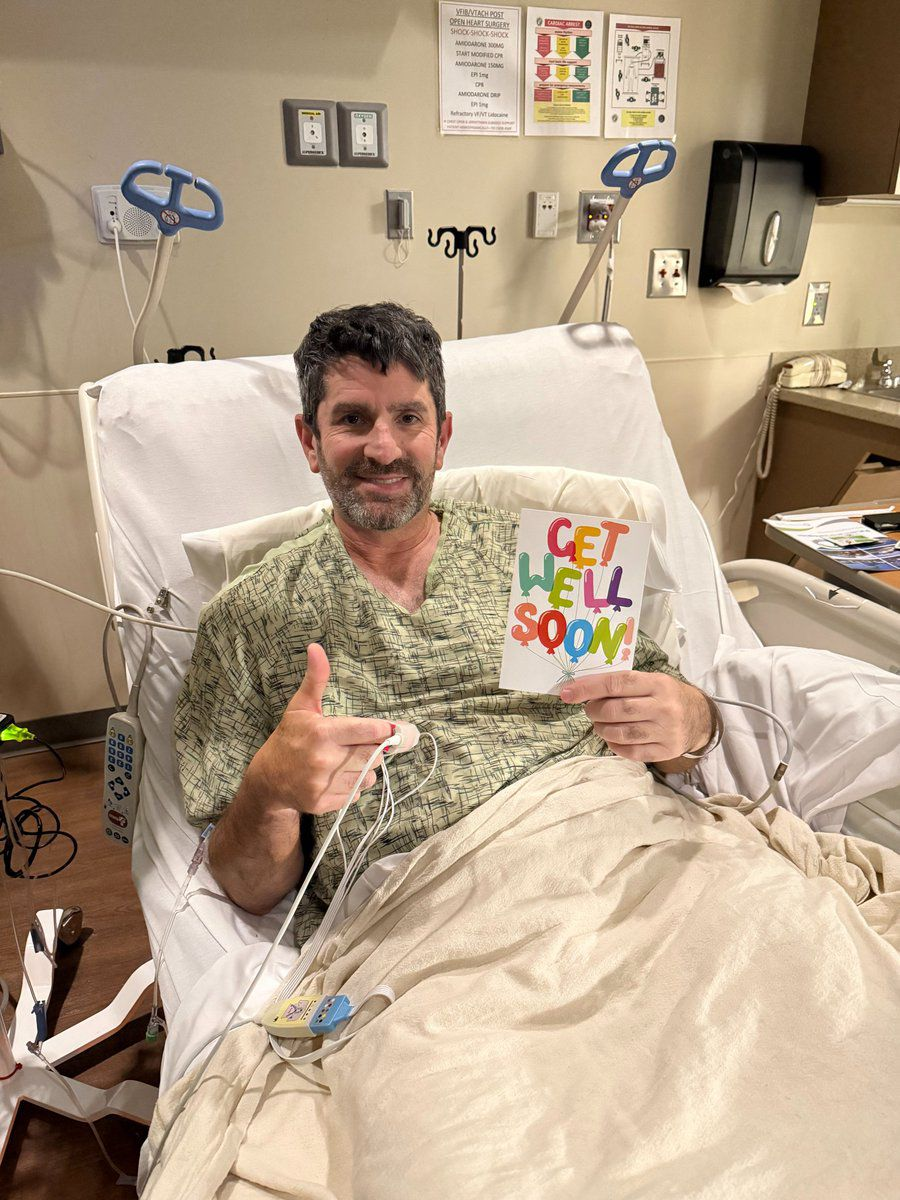
That’s what reportedly happened to a driver using Tesla’s Full Self-Driving (FSD) system. According to a widely shared account online, the driver began experiencing heart attack symptoms while on the road. Instead of panicking and trying to steer through traffic, the vehicle’s autonomous driving system continued navigating toward a hospital.
Let’s pause there.
This isn’t about convenience. This is about driver incapacitation, one of the most dangerous situations imaginable. When a human behind the wheel can no longer control the car, outcomes are often catastrophic.
Advanced driver-assistance systems and autonomous vehicle safety software are designed to maintain lane position, control speed, respond to surrounding vehicles, and follow navigation routes. In a medical emergency, those capabilities can buy time. And sometimes, time is everything.
Now, we need to be clear: FSD is still considered a driver-assistance system. The driver is legally responsible. It’s not marketed as a medical emergency solution.
But here’s the bigger question.
If AI-powered driving systems can safely handle the vehicle while a human is temporarily impaired, even for a few critical minutes, could that reduce fatalities tied to sudden medical events?
This is one story. Anecdotal. Not a clinical study.
Still, it introduces something important: autonomous systems don’t freeze under pressure.
And this isn’t the only time self-driving tech reacted faster than a human could.
Real Story #2: Cybertruck FSD Swerves to Avoid a Head-On Crash
A head-on collision is one of the deadliest types of crashes. There’s almost no room for error. No time to think. Just impact.
In a widely shared clip, a Tesla Cybertruck using Full Self-Driving reportedly swerved to avoid an oncoming vehicle that had drifted into its lane. The movement was quick. Controlled. Decisive.
Here’s why this matters.
Human reaction time averages around 1.5 seconds. That’s the time it takes to:
- See the danger
- Recognize it
- Decide what to do
- Move your hands
At highway speeds, 1.5 seconds can mean traveling the length of a football field before reacting.
AI collision avoidance systems don’t “decide” the same way we do. They’re constantly measuring trajectory, lane position, closing speed, and angle. If something crosses a safety threshold, the system can react in milliseconds.
That doesn’t make autonomous vehicle safety tech flawless. Sensors can misread. Edge cases exist. But in scenarios where split-second steering corrections prevent catastrophic impact, faster processing can mean fewer funerals.
And this wasn’t a slow parking lot situation. It was a high-stakes moment where hesitation could’ve been fatal.
Which makes the next story even more interesting.
Because sometimes… hesitation is exactly what saves you.
Real Story #3: Model 3 FSD Hesitates at a Green Light — Avoids a T-Bone Crash
We’re trained to go on green. Green means safe. Move.
But in a shared clip, a Tesla Model 3 using Full Self-Driving reportedly paused for a moment at a green light. The driver likely expected it to continue.
Then, a car blasted through the intersection from the side, running a red light.
If the vehicle had accelerated immediately, it could have been a classic T-bone collision. The kind that crushes doors and changes lives in seconds.
That hesitation? It may have prevented impact.
Here’s what’s interesting.
Advanced driver-assistance systems don’t just respond to traffic lights. They monitor cross-traffic speed, object detection, and trajectory prediction. AI collision avoidance software can flag a vehicle that isn’t slowing down when it should be.
Humans assume compliance, but machines calculate probability.
Now, we have to be careful here. One viral video doesn’t prove statistical superiority. And FSD still requires driver supervision.
But this case highlights something subtle and powerful: Autonomous vehicle safety systems don’t rely on trust. They rely on data.
And in unpredictable intersections where thousands of serious crashes happen every year, that difference matters.
Real Story #4: Waymo Vehicle Swerves to Avoid a Child
Imagine a child losing balance near traffic.
There’s no warning. No brake lights. No signal. Just a body suddenly in the road.
In a widely discussed incident, a fully autonomous vehicle from Waymo reportedly reacted when a young girl fell into traffic. The vehicle swerved and avoided what could have been a devastating collision.
No driver grabbed the wheel. No human intervened. The system responded on its own.
That’s important.
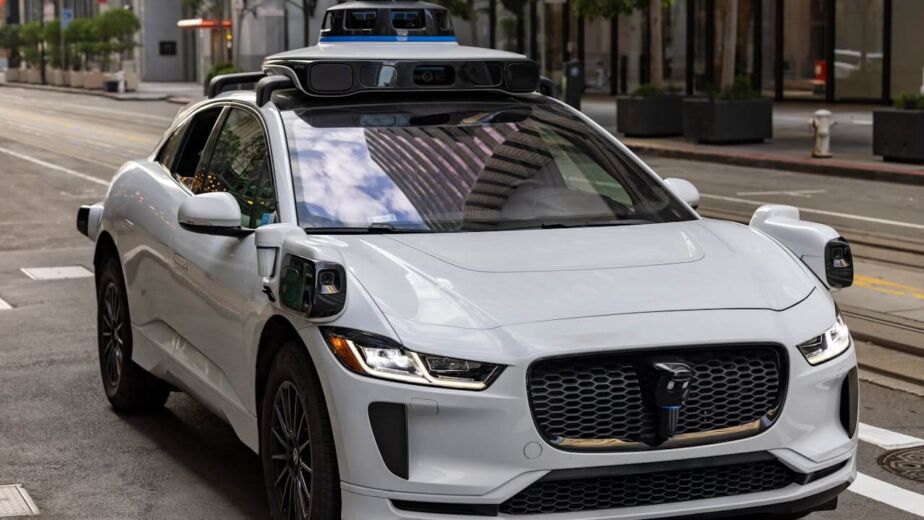
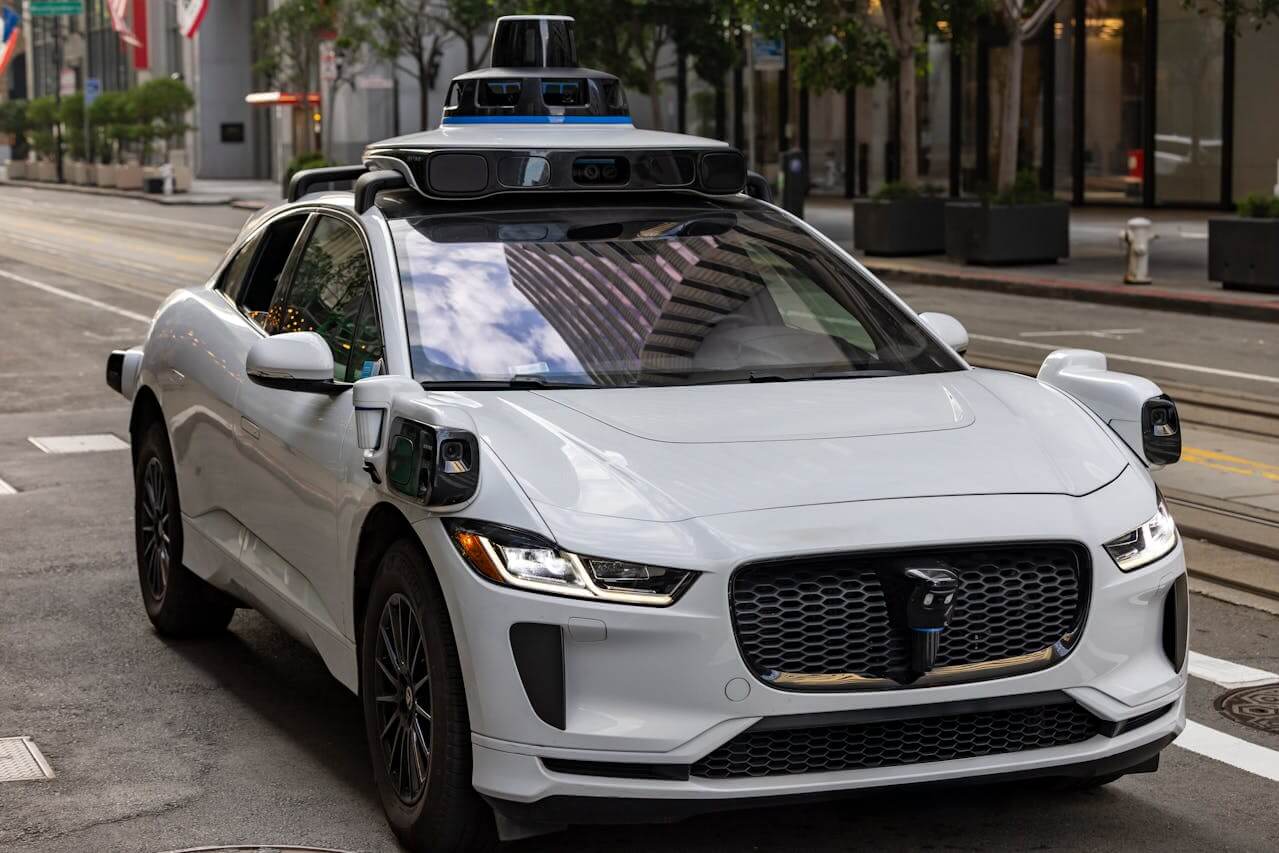
Unlike driver-assistance systems that require supervision, Waymo’s vehicles operate at a higher level of autonomy in certain cities. Their autonomous vehicle safety stack combines lidar, radar, cameras, and real-time mapping. The car builds a 360-degree model of the world around it — constantly updating it.
Here’s the key difference from human drivers:
We look forward most of the time, check mirrors occasionally, and miss things.
AI doesn’t get tunnel vision. It tracks pedestrians, cyclists, and vehicles simultaneously, and even when they’re partially obscured.
Again, this is one incident. Not a sweeping safety conclusion.
But it shows something powerful: fully autonomous systems can detect and react to sudden pedestrian movement without hesitation or panic.
And that brings us to something many people don’t talk about enough: Fatigue.
Because sometimes the most dangerous driver isn’t reckless. They’re just exhausted.
Beyond the U.S.: Fatigue Detection and AI Safety Systems in China
Here’s something most drivers underestimate.
Drowsy driving can be just as dangerous as drunk driving.
When you’re exhausted, your brain slips into “micro-sleep.” That’s when your eyes close for a few seconds — sometimes without you even realizing it. At highway speeds, that’s enough to drift into another lane or off the road entirely.
In China, several automakers and fleet operators have deployed AI-powered driver monitoring systems that track eye movement, head position, and blinking patterns. If the system detects fatigue, it sends escalating alerts. Some vehicles even slow down or pull over if the driver doesn’t respond.
This is part of a broader push toward autonomous vehicle safety and intelligent driver-assistance systems.
Fatigue-related crashes kill thousands every year globally. Unlike reckless speeding, fatigue doesn’t look dramatic. It’s quiet. Slow. Invisible.
AI doesn’t get tired.
The Controversy: When Self-Driving Systems Get It Wrong
Not every story ends with a near-miss.
There have been serious crashes involving driver-assistance systems and autonomous vehicles. Some have been fatal. And those cases deserve attention, not dismissal.
Vehicles using advanced systems from companies like Tesla have been involved in high-profile crashes where drivers were reportedly relying too heavily on automation. In some cases, drivers weren’t paying attention. In others, questions were raised about how the system interpreted road conditions.
Meanwhile, autonomous fleets operated by companies like Cruise faced regulatory scrutiny after incidents in urban areas, leading to temporary suspensions of operations in certain cities.
Here’s the uncomfortable reality: AI doesn’t get tired, but it can misinterpret edge cases, unusual road markings, unexpected construction zones, and rare scenarios not heavily represented in training data.
Autonomous vehicle safety systems learn from massive datasets, but real roads are messy. And rare events are often the hardest to predict.
There’s also a human factor problem.
When drivers use advanced driver-assistance systems, some become overconfident. They assume the car can handle everything. That gap between perception and capability is dangerous.
So the debate isn’t just “Is the tech safe?”
It’s also:
- Are drivers using it correctly?
- Are companies communicating limits clearly?
- Are regulators keeping up?
Public trust is fragile. Every crash involving automation gets amplified. And understandably so.
But here’s the key distinction:
The standard shouldn’t be “Is it perfect?”
The real comparison is “Is it safer than the average human driver?”
And that’s where things get nuanced.
So… Are Self-Driving Cars Already Saving Lives?
If you’re looking for a simple yes or no, you won’t get one.
Here’s the honest answer:
There is credible evidence that certain autonomous vehicle safety features like automatic emergency braking, lane-keeping assist, and AI collision avoidance are reducing specific types of crashes.
There are documented stories where advanced systems reacted faster than a human likely could have.
There are early fleet reports suggesting lower crash rates in controlled environments.
At the same time: The technology isn’t flawless, edge cases still exist, misuse and overreliance are real risks, and long-term nationwide data is still developing.
So where does that leave us?
It suggests something important.
We may already be in a transition phase where cars are acting like co-pilots. Not replacing humans completely, but correcting our worst mistakes. Catching the moment we look down. The second we drift. The instant we hesitate too long — or not long enough.
If human error contributes to the majority of crashes, even partial reduction matters.
Saving one life matters. Saving thousands over time would be historic.
The real question might not be:
“Are self-driving cars perfect?”
But instead:
“Are they improving safety faster than humans can on their own?”
And that’s something we’ll continue to measure – mile by mile.
Frequently Asked Questions About Self-Driving Car Safety
Are self-driving cars safer than human drivers?
It depends on the system and the situation.
Advanced driver-assistance systems like automatic emergency braking and lane-keeping assist have been shown to reduce certain types of crashes. According to the Insurance Institute for Highway Safety, front crash prevention systems significantly lower rear-end collisions.
Fully autonomous vehicles operating in limited areas have reported promising safety records, but they’re still being tested in controlled environments.
So the answer isn’t absolute but the data suggests certain autonomous safety features are already improving road safety.
How many lives could autonomous vehicles save each year?
Estimates vary widely.
Because human error contributes to the majority of serious crashes, researchers believe widespread adoption of advanced autonomous vehicle safety systems could prevent thousands of deaths annually.
But that depends on:
- Adoption rates
- Proper use
- Continued technological improvement
- Regulatory oversight
The long-term impact will likely unfold gradually, not overnight.
What’s the difference between driver-assistance and full self-driving?
This is where confusion happens.
Driver-assistance systems (often called Level 2 automation) help with steering, braking, and speed control, but the human must supervise at all times.
Higher-level autonomous systems (Level 4 in certain cities) can operate without human input under specific conditions.
They are not the same thing. And safety performance varies depending on which system you’re talking about.
Can self-driving cars detect medical emergencies?
Most systems are not specifically designed to diagnose medical events.
However, advanced driver-assistance systems can maintain lane position, control speed, and follow navigation routes. In situations where a driver becomes temporarily impaired, that capability may help reduce crash risk.
Future systems may integrate more advanced health monitoring but that’s still developing.
Are autonomous vehicles legal everywhere?
No.
Regulations vary by state and country. Some cities allow fully autonomous vehicle fleets in limited zones. Others restrict testing. Laws are evolving as the technology matures.
Drivers should always check local regulations before assuming a system can operate without supervision.