Oura Ring vs Apple Watch for Sleep Tracking: Which Is Actually More Accurate?

Ever wake up feeling exhausted… but your sleep tracker says you slept great? Yeah, that disconnect is frustrating. And it’s exactly why accuracy matters more than fancy graphs or daily scores.
With devices like the Oura Ring and Apple Watch leading the space, a lot of people are asking the same question: which one can you actually trust? Some reports suggest consumer sleep trackers can misread certain sleep stages by a noticeable margin, which means the data guiding your habits might not be as reliable as it looks.
So here’s the deal. I’m going to break down how both devices track sleep, where they get it right, where they fall short, and which one gives you data you can actually use.
Why Sleep Tracking Accuracy Matters More Than You Think
Here’s the thing. Most people don’t buy a sleep tracker just to look at numbers. They want answers.
Am I actually sleeping well? Why do I feel tired even after 7–8 hours? What should I fix?
And that’s where sleep tracking accuracy becomes everything.
If your device tells you that you had “great sleep” when you actually tossed and turned all night, it doesn’t just feel wrong, it leads you in the wrong direction. You might ignore real problems or double down on habits that aren’t working.Now add this: a lot of popular wearables estimate sleep stages like deep sleep and REM using indirect signals — heart rate, movement, and temperature. That’s helpful, but it’s not the same as clinical sleep testing. So small errors can turn into misleading patterns over time.
And let’s be real, most people aren’t trying to become sleep scientists. They just want a reliable sleep tracker that gives clear, useful feedback they can trust.
That’s exactly why this comparison matters.
Because between the Oura Ring vs Apple Watch, the real question isn’t just “which has more features?”
It’s: Which one actually tells you the truth about your sleep?
Quick Comparison: Oura Ring vs Apple Watch
If you strip away the marketing, these two devices take very different approaches to sleep tracking.
The Oura Ring Gen3 is built for one main job: tracking your body while you live your life quietly in the background. No screen. No buzzing. You wear it, forget about it, and it focuses heavily on recovery, readiness, and detailed sleep insights.
The Apple Watch Series 9 (and newer models) is the opposite. It’s an all-in-one smartwatch: fitness tracking, notifications, apps, calls, and sleep tracking is just one piece of a much bigger system.
That difference alone shapes how each one performs.
With Oura, everything revolves around passive, high-quality data collection. It leans heavily into metrics like heart rate variability, body temperature, and long-term sleep trends to give you a deeper picture of your recovery.
With Apple Watch, you’re getting flexibility and ecosystem power. It tracks your sleep using motion and heart rate, and you can extend its capabilities with third-party sleep apps. But out of the box, the insights are a bit more surface-level.
So when people compare the two, they’re not just choosing between devices, they’re choosing between:
- A dedicated sleep tracker that specializes in accuracy and recovery
- A multi-purpose smartwatch that includes sleep tracking as a feature
And that sets the stage for the big question we’re about to answer next.
How Sleep Tracking Works (Simple Explanation)
Let’s clear something up first.
Neither the Oura Ring Gen3 nor the Apple Watch Series 9 can directly see your sleep the way a lab test can.
They’re making smart guesses.
Here’s how.
Both devices rely on a mix of signals from your body:
- Heart rate — how fast or slow it beats during the night
- Movement — whether you’re still, restless, or waking up
- Body temperature trends (Oura leans more into this)
They take all that data and run it through algorithms to estimate what stage of sleep you’re in.
Now, about those stages.
Sleep isn’t just “asleep” or “awake.” It’s broken into:
- Light sleep
- Deep sleep
- REM sleep (the dreaming stage)
Each one plays a different role in how rested you feel.
Here’s where it gets tricky.
Devices are generally pretty good at tracking total sleep time, like when you fell asleep and when you woke up. But when it comes to sleep stage accuracy (deep vs REM), things get a bit fuzzy.
Why?
Because the gold standard, what sleep labs use, measures brain activity. Your ring or watch doesn’t have access to that. So it’s inferring based on patterns, not direct signals.
Think of it like this:
It’s the difference between watching a movie… and listening through the wall and guessing what’s happening. You can get close but not perfect.
And that’s exactly why some devices feel more accurate than others.
The better the sensors and the smarter the algorithm, the closer the guess.
Oura Ring Sleep Tracking — How It Performs
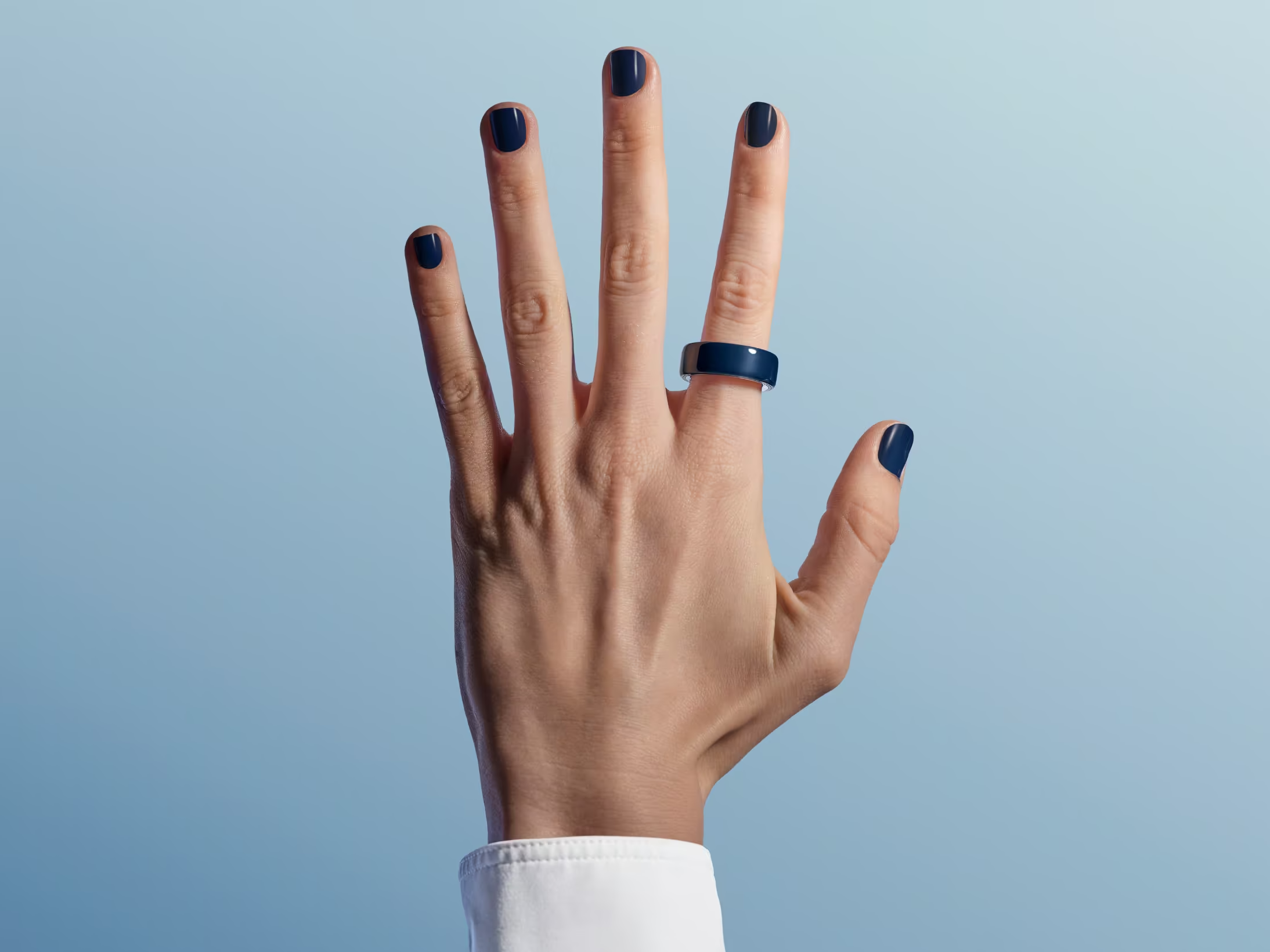
The Oura Ring Gen3 is built with one priority in mind: giving you the most accurate sleep tracking possible without getting in your way.
And you feel that immediately.
Because unlike a smartwatch, there’s no screen lighting up, no notifications buzzing, no distractions. You wear it, go to sleep, and it quietly collects data all night.
But what actually makes it stand out?
It leans heavily on three key signals:
- Heart rate and heart rate variability (HRV)
- Body temperature trends
- Movement (restlessness, wake-ups)
That combination matters.
Especially the temperature tracking, which is something most smartwatches (including Apple Watch) don’t use as deeply. Subtle temperature shifts during the night can reveal changes in your sleep quality, recovery, and even early signs of stress or illness.
Now let’s talk about what people really care about: accuracy.
In real-world use, Oura tends to be: very reliable for total sleep time, strong at detecting when you’re actually asleep vs just lying in bed, and more consistent with sleep stage trends over time (even if not perfect night-to-night).
Where it really shines isn’t just raw data, it’s interpretation.
Instead of dumping numbers on you, it gives you: a sleep score (how well you slept) and a readiness score (how recovered your body is).
And here’s the key, those scores are built from patterns, not just one night. So even if there’s a small error here or there, the long-term insights tend to be more useful and actionable.
That’s why a lot of people who are serious about improving their sleep like athletes, founders, and health-focused users lean toward Oura. It feels less like a gadget… and more like a quiet coach in the background.
Of course, it’s not perfect.
Sleep stage detection (deep vs REM) can still be off sometimes, just like every wearable. But overall, when people talk about the best sleep tracker for accuracy, Oura is almost always in the conversation.
Apple Watch Sleep Tracking — How It Performs
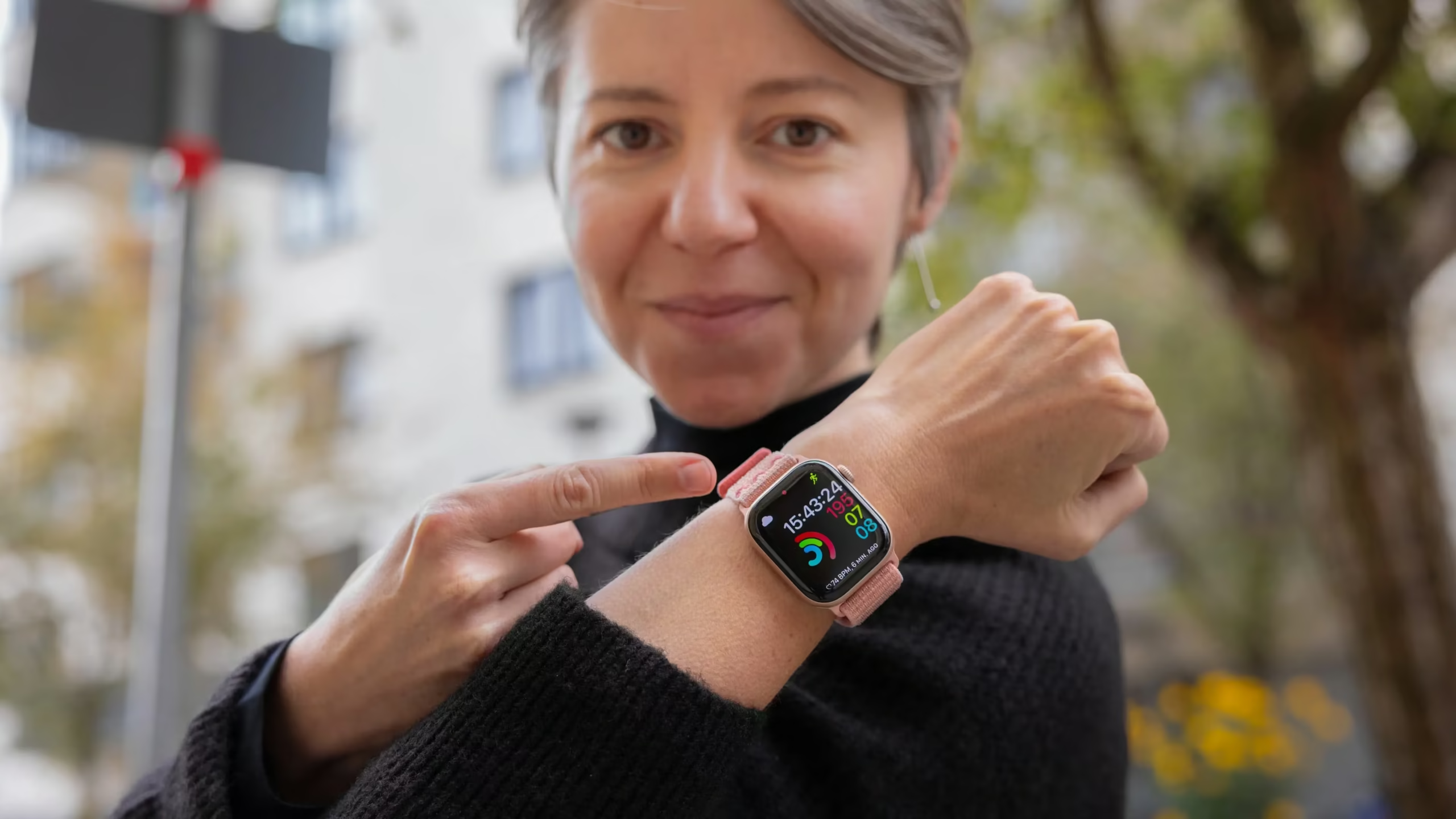
The Apple Watch Series 9 wasn’t built just for sleep. It’s a full-on smartwatch with fitness, notifications, apps, calls and sleep tracking is one feature inside that bigger experience.
That doesn’t make it bad. But it does change how it performs.
When it comes to sleep tracking, Apple Watch mainly uses:
- Movement (accelerometer data)
- Heart rate patterns
In newer watchOS versions, Apple has improved how it estimates sleep stages (including REM and deep sleep), and it’s gotten noticeably better over time.
But here’s the honest take.
Out of the box, Apple’s sleep data tends to be: accurate for sleep duration (when you fall asleep and wake up), decent at detecting wake-ups during the night, and less consistent with detailed sleep stages compared to dedicated trackers
Where Apple Watch takes a different approach is in flexibility.
You’re not locked into one way of tracking sleep. You can use third-party apps that go deeper into: sleep analysis, smart alarms, snoring detection, and sleep coaching.
So if you like customizing your setup, that’s a big win.
But there’s a trade-off.
Unlike the Oura Ring, Apple mostly gives you raw data inside the Health app. You’ll see charts, trends, and sleep stages, but not as much built-in guidance on what to do with that information.
And then there’s the real-life factor people don’t always talk about:
Wearing a watch to bed isn’t for everyone.
Some people find it bulky. Others run into battery issues and end up charging it overnight, which means no sleep data at all.
So while the Apple Watch is powerful and improving fast, when it comes strictly to sleep tracking accuracy and depth of insight, it’s still playing catch-up to more specialized devices.
Accuracy Showdown: Oura Ring vs Apple Watch
So, which one actually wins when it comes to sleep tracking accuracy?
Let’s break it down where it really matters.
1. Total Sleep Time (Who Tracks Your Hours Better?)
Both the Oura Ring Gen3 and the Apple Watch Series 9 do a solid job here.
They can usually tell: when you fall asleep, when you wake up, and how long you stayed in bed.
In most real-world use, the difference is small.
Verdict: It’s basically a tie.
2. Sleep Stages (Deep Sleep, REM, Light Sleep)
This is where things get interesting.
Both devices are estimating, not measuring your sleep stages. But Oura has an edge because it uses more biometric signals, especially body temperature and HRV, to refine its guesses.
The Apple Watch has improved a lot, but it still leans more on movement and heart rate.
What that means in practice: Oura tends to give more stable and believable trends over time and Apple Watch can feel a bit inconsistent night-to-night.
Neither is perfect, but one is more reliable.
Verdict: Oura Ring wins for sleep stage accuracy.
3. Wake Detection (Are You Actually Awake?)
You know those nights where you wake up, check your phone, and your tracker says you were “asleep” the whole time?
Yeah, that’s a common frustration.
Oura tends to be better at detecting subtle wake-ups, especially when your body shows signs of restlessness or stress.
Apple Watch can sometimes miss these moments or smooth them over in the data.
Verdict: Oura Ring is more precise here.
4. Overall Sleep Insight (Data You Can Actually Use)
Here’s where the gap becomes more obvious.
Oura doesn’t just track your sleep, it connects it to your recovery, stress, and readiness. So you’re not just seeing numbers… you’re getting meaning.
Apple Watch gives you clean data, but you often have to interpret it yourself (or rely on extra apps).
Verdict: Oura Ring feels more actionable.
Final Accuracy Verdict
If your main goal is the most accurate sleep tracker, the winner is clear:
The Oura Ring comes out ahead.
Not because it’s perfect, it’s not, but because: It uses more relevant data signals, it’s more consistent over time, and it turns that data into insights you can actually trust.
The Apple Watch is still a strong option, especially if you want an all-in-one device. But if we’re judging purely on sleep tracking accuracy, it’s not quite on the same level yet.
Comfort Matters: Which One Is Easier to Sleep With?
If your goal is effortless, consistent sleep tracking, the answer is simple:
Oura Ring wins on comfort and convenience.
It’s lighter, less intrusive, and easier to wear every single night without interruption.
The Apple Watch can still work, especially if you’re already used to wearing one, but it asks a bit more from you.
And when it comes to building better sleep habits, the easier something is… the more likely you are to stick with it.
Pros and Cons of Each Device
Oura Ring — Pros & Cons
Let’s start with the Oura Ring Gen3.
What people love:
It’s effortless.
You put it on and forget about it, and that alone solves a huge problem most sleep trackers have. No distractions, no screen lighting up at night, no interruptions.
It also gives you clear, actionable insights. You’re not stuck guessing what your sleep data means. The readiness and sleep scores make it easy to adjust your habits without overthinking.
And when it comes to sleep tracking accuracy, it’s one of the most trusted consumer devices out there, especially for long-term trends.
Where it falls short:
It’s focused.
That’s great if you care about sleep and recovery. But if you’re expecting a full smartwatch experience, notifications, calls, and apps, it’s just not built for that.
Also, wearing a ring 24/7 isn’t for everyone. Some people take time to get used to it, especially during workouts or typing.
Apple Watch — Pros & Cons
Now the Apple Watch Series 9.
What people love:
It does everything.
Fitness tracking, notifications, calls, apps – it’s an all-in-one device that fits into your daily life seamlessly. And if you’re already in the Apple ecosystem, it just works.
When it comes to sleep, it still gives you reliable basics like sleep duration and trends. And if you want more depth, you can extend it with third-party apps.
Where it falls short:
Sleep tracking isn’t its main strength.
The insights can feel a bit shallow unless you put in extra effort to interpret the data or install additional apps.
Then there’s the battery and comfort factor. Charging it daily and wearing it overnight isn’t always convenient and for some people, it becomes a reason to stop tracking sleep altogether.
Who Should Choose Oura Ring?
The Oura Ring Gen3 isn’t for everyone.
But for the right person, it just clicks.
You should seriously consider it if your main goal is simple:
You want to understand your sleep… and actually improve it.
This device makes the most sense for people who care about how their body is recovering, not just how many hours they slept.
Who Should Choose Apple Watch?
The Apple Watch Series 9 is for a very different type of user.
It’s not just about sleep.
It’s for someone who wants one device that does almost everything — and is okay with sleep tracking being just one part of that package.
Final Verdict: Which One Should You Trust for Sleep Tracking?
If we cut through all the features, apps, and branding, the real question is simple: Which device gives you sleep data you can actually trust and use?
Between the Oura Ring Gen3 and the Apple Watch Series 9, the answer is pretty clear.
Oura Ring comes out on top for sleep tracking accuracy.
Not because it’s perfect, it’s not, but because it’s: more consistent with sleep stage trends, better at detecting subtle wake-ups, and designed specifically for recovery and sleep insights.
And maybe more importantly…It turns all that data into something you can actually act on.
You wake up, check your score, and instantly understand how your body is doing, no guesswork, no digging through charts.
That’s a big deal.
Now, does that mean Apple Watch isn’t worth it? Not at all.
If you want: a powerful all-in-one device, fitness tracking, notifications, and apps, and decent sleep tracking as part of a bigger system.
Then the Apple Watch is still a great choice.
But if your priority is crystal clear: “I want the most accurate sleep tracker that helps me sleep better”
Then the Oura Ring is the better fit.
FAQs: Oura Ring vs Apple Watch for Sleep Tracking
Is Oura Ring more accurate than Apple Watch for sleep tracking?
Yes, in most real-world use, the Oura Ring Gen3 tends to be more accurate for sleep tracking.
It uses a wider range of body signals like heart rate variability and temperature, which helps it produce more consistent sleep stage trends and better detect subtle wake-ups. The Apple Watch Series 9 is still solid, but it leans more on movement and basic heart rate data.
Can Apple Watch track deep sleep accurately?
It can estimate deep sleep, but it’s not always precise.
Like most wearables, the Apple Watch is making educated guesses rather than directly measuring brain activity. It’s generally good enough for spotting patterns, but not the best option if you want highly detailed sleep stage accuracy.
Is the Oura Ring worth it just for sleep tracking?
If sleep is a top priority for you, yes, it can be worth it.
The Oura Ring doesn’t just track your sleep; it helps you understand and improve it. The insights around recovery, readiness, and long-term trends make it more useful than devices that only show raw data.
Which is the best sleep tracker overall?
If you’re focused purely on sleep tracking accuracy and insights, the Oura Ring is one of the best options available right now.
If you want a more versatile device that also handles fitness, notifications, and apps, the Apple Watch is a better all-around choice, just not as specialized for sleep.
Do I need a subscription for Oura Ring?
Yes, Oura includes a subscription for full access to its insights and detailed data.
Without it, you’ll still get basic information, but most of the value, especially the deeper sleep and recovery insights — comes from the membership.